
 17 Oct 2026









U.S. sanctions senior Russian officials over Navalny case
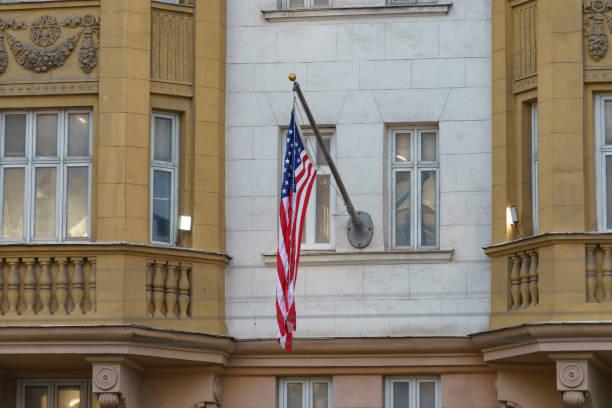
The U.S. Treasury Department has imposed sanctions against seven Russian officials over Alexey Navalny's case, the agency website informs.
Director of the Russian Federal Security Service (FSB) Alexander Bortnikov, First Deputy Chief of Staff of the Presidential Executive Office Sergei Kiriyenko, Chief of the Presidential Domestic Policy Directorate Andrei Yarin, Deputy Defense Ministers Alexei Krivoruchko and Pavel Popov, Federal Penitentiary Service director Alexander Kalashnikov and Prosecutor General Igor Krasnov were targeted by sanctions.
"We join the EU in condemning Alexei Navalny’s poisoning as well as his arrest and imprisonment by the Russian government," Secretary Janet L. Yellen stated.
The United States also blacklisted the 33rd Central Research Institute and the 27th Scientific Center of Russia’s Defense Ministry, and the State Research Institute of Organic Chemistry and Technology. In addition, the technical document includes the FSB and the Main Intelligence Directorate (currently called the Main Directorate of the General Staff of the Armed Forces), who were sanctioned earlier by Washington on other grounds, TASS reported.
Earlier, the European Union announced its own sanctions against Head of the Russian Investigative Committee Alexander Bastrykin, Director of the National Guard Viktor Zolotov, head of the Federal Penitentiary Service Alexander Kalashnikov and Prosecutor General Igor Krasnov over the Navalny case. They are all banned from entering the EU or hold assets in EU banks. These are first sanctions that were introduced against Russia as part of the mechanism that envisages responses to human rights violations. Previously, such restrictions were either imposed as part of general sanctions against separate countries or the so-called special mechanisms, for instance for using chemical weapons.
Navalny was rushed to a local hospital in the Siberian city of Omsk on August 20 after collapsing on a Moscow-bound flight from Tomsk. Later, he was airlifted to Berlin and admitted to the Charite hospital. On September 2, Berlin claimed that having examined Navalny’s test samples, German government toxicologists had come to the conclusion that the blogger had been affected by a toxic agent belonging to the Novichok family. On January 17, Navalny was detained at Moscow’s Sheremetyevo Airport upon arrival from Berlin.
On February 2, Moscow’s Simonovsky District Court replaced Alexey Navalny’s suspended sentence in the Yves Rocher embezzlement case with a three-and-a-half-year jail sentence in a medium-security prison.


 Latest news
Latest news
Latest newsBulgaria Asks NATO to Strengthen Its Defences Amid Black Sea Threats: Sofia Fears Growing Risks to Maritime Shipping
16.Oct.2026
Black Sea Shipping Risks Threaten Bulgaria’s 5 Million Tonnes of Wheat Exports
15.Oct.2026
Georgia’s Foreign Funding and Political Ban Laws Draw Criticism from the Venice Commission
15.Oct.2026
Kazakhstan Promotes a Caspian Green Energy Corridor: Astana Seeks New Routes to the European Market
14.Oct.2026
Inflation in Romania Accelerates to 6.61%: Rising Prices Increase Pressure on Households and the Economy
13.Oct.2026
Can Europe Protect the International Criminal Court from Trump’s Sanctions?
13.Oct.2026
Georgia’s Constitutional Court Continues Case on Banning Opposition Parties: Political Pluralism at Stake
12.Oct.2026
Azerbaijan and Iran Step Up Security Contacts Amid Hijab Protests
12.Oct.2026
Personnel Shortages Complicate Ukrainian Forces’ Rotation: Ukraine Faces Long-Term Challenges on the Front Line
11.Oct.2026
Trump Eases Sanctions on Russian Fuel After Talks with Putin: Kyiv Fears Boost to Moscow’s War Revenues
10.Oct.2026
Putin Seeks to Strengthen Russia’s Influence in the Post-Soviet Space Through the CIS
10.Oct.2026
Russia and the South Caucasus: External Pressure, Political Competition and a Crisis of Trust
10.Oct.2026
Peaceful Settlement Between Armenia and Azerbaijan: Moving from Declarations to Implementation
10.Oct.2026
Moldova Ready to Accept as Many Ukrainians as Necessary if Situation Worsens This Winter
09.Oct.2026
Turkmenistan Turns Avaza into a Regional Diplomatic Hub as Caspian, Central Asian and CIS Agendas Converge
08.Oct.2026