
 17 Oct 2026









Anti-Turkey rhetoric within EU sabotages bloc's future, ruling AK Party says
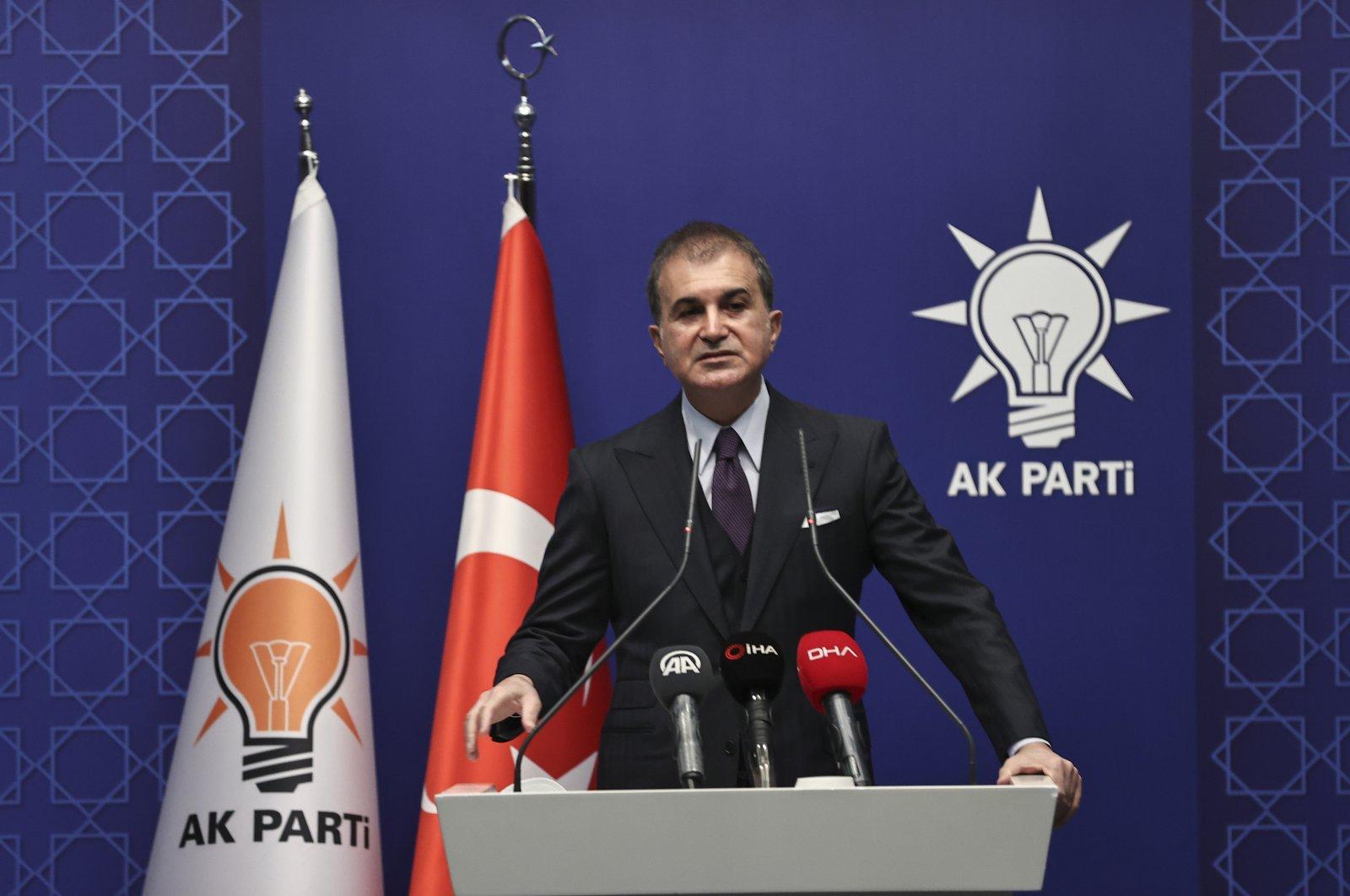
Whoever speaks against Turkey in the European Union actually seeks to destroy Europe's future, the spokesperson for Turkey's ruling party said Monday.
Accusing some European leaders of taking a different approach when trying "to cause disturbances in Turkey," Justice and Development Party (AK Party) spokesperson Ömer Çelik said after a meeting of the party's Central Executive Board (MYK) that these leaders "apply double standards when turmoil begins to emerge in their own countries."
As Brexit came to an end and the United Kingdom left the EU on Jan. 1, Çelik said: "Europe now is a Europe that needs to establish more strategic relations with Turkey."
After a year that saw ups and downs in Turkish-EU relations, Turkish leaders recently reiterated the country's candidacy for membership in the bloc, saying that relations can improve this year if the EU takes steps that show respect for Turkey.
Turkey hopes to normalize its ties with the EU in 2021 following a year in which tensions have characterized international relations, Faruk Kaymakçı, deputy foreign minister and director for EU affairs, told Daily Sabah last week. In the upcoming year, the country aims to promote win-win relations, to find a fair solution to the Eastern Mediterranean crisis and to update the March 18 statement with all of its dimensions, including migration, carrying out reforms and bringing Ankara closer to the bloc, he added.
EU leaders during a meeting in Brussels on Dec. 10 decided to draw up a list of Turkish targets to sanction over what they described as Ankara's "unilateral actions and provocations" in the Eastern Mediterranean. Ahead of the summit, Greece called for additional sanctions, an EU arms embargo on Turkey and the suspension of the Turkey-EU customs union, but during discussions, a majority of European leaders opposed severe economic sanctions, opting for a softer approach, creating space for a positive agenda.


 Latest news
Latest news
Latest newsBulgaria Asks NATO to Strengthen Its Defences Amid Black Sea Threats: Sofia Fears Growing Risks to Maritime Shipping
16.Oct.2026
Black Sea Shipping Risks Threaten Bulgaria’s 5 Million Tonnes of Wheat Exports
15.Oct.2026
Georgia’s Foreign Funding and Political Ban Laws Draw Criticism from the Venice Commission
15.Oct.2026
Kazakhstan Promotes a Caspian Green Energy Corridor: Astana Seeks New Routes to the European Market
14.Oct.2026
Inflation in Romania Accelerates to 6.61%: Rising Prices Increase Pressure on Households and the Economy
13.Oct.2026
Can Europe Protect the International Criminal Court from Trump’s Sanctions?
13.Oct.2026
Georgia’s Constitutional Court Continues Case on Banning Opposition Parties: Political Pluralism at Stake
12.Oct.2026
Azerbaijan and Iran Step Up Security Contacts Amid Hijab Protests
12.Oct.2026
Personnel Shortages Complicate Ukrainian Forces’ Rotation: Ukraine Faces Long-Term Challenges on the Front Line
11.Oct.2026
Trump Eases Sanctions on Russian Fuel After Talks with Putin: Kyiv Fears Boost to Moscow’s War Revenues
10.Oct.2026
Putin Seeks to Strengthen Russia’s Influence in the Post-Soviet Space Through the CIS
10.Oct.2026
Russia and the South Caucasus: External Pressure, Political Competition and a Crisis of Trust
10.Oct.2026
Peaceful Settlement Between Armenia and Azerbaijan: Moving from Declarations to Implementation
10.Oct.2026
Moldova Ready to Accept as Many Ukrainians as Necessary if Situation Worsens This Winter
09.Oct.2026
Turkmenistan Turns Avaza into a Regional Diplomatic Hub as Caspian, Central Asian and CIS Agendas Converge
08.Oct.2026