
 17 Oct 2026









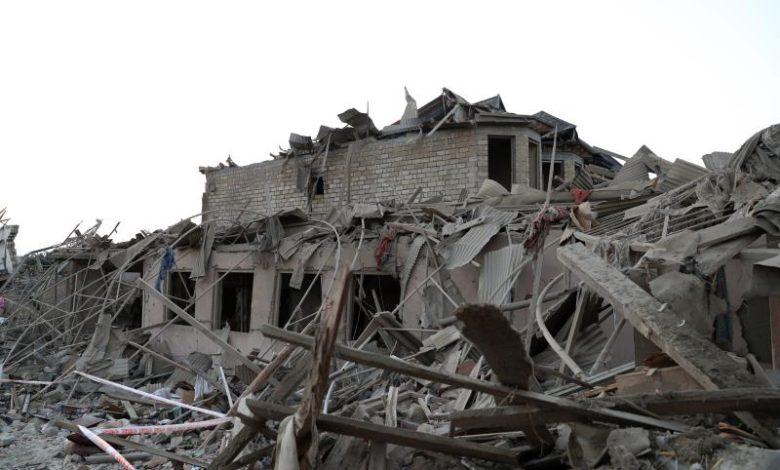
As a result of a rocket attack on Ganja, 12 residents were killed and at least 40 people were injured

On the night of October 17, a rocket attack on Ganja killed 12 people and injured more than 40 civilians, the Prosecutor General's office of Azerbaijan reported.
The Ministry of emergency situations announced the continuation of the rescue operation.
The attack of the Armenian armed forces on Ganja was carried out using the Elbrus operational-tactical missile system (SCUD). Assistant to the President of Azerbaijan Hikmet Hajiyev wrote this on Twitter.
"Launching such missiles at densely populated residential areas shows the complete immorality and schizophrenic thinking of the military-political leadership of Armenia," Hajiyev said.
Ballistic missiles were fired at Ganja from the territory of Armenia, Hajiyev said.
"Ballistic missiles were fired from the territory of Armenia at the city of Ganja." It's far from a war zone. There was no military necessity. The Ministry of foreign Affairs of Armenia is viciously trying to deny the responsibility of its state for these war crimes," Hajiyev wrote on Twitter, commenting on the statement of the Armenian foreign Ministry, claiming that Azerbaijan's UAVs were allegedly found aimed at targets in Armenia.
He also said that the air defense forces of Azerbaijan prevented a missile attack on Mingachevir.
In turn, the Ministry of defense of Azerbaijan denied reports of attacks by the Azerbaijani Armed forces on military infrastructure and civilian objects in Armenia.
"The Azerbaijani army fires only at legitimate military targets in the direction of liberation of the occupied territories. Azerbaijan has no military goal in Armenia," the Azerbaijani military Department said in a statement.
This is Armenia's second missile attack on Ganja. On October 11, at 02:00, a four-story residential building was hit by a rocket in the center of the city, which, according to the Prosecutor General's office of Azerbaijan, killed 10 people and injured 34.


 Latest news
Latest news
Latest newsBulgaria Asks NATO to Strengthen Its Defences Amid Black Sea Threats: Sofia Fears Growing Risks to Maritime Shipping
16.Oct.2026
Black Sea Shipping Risks Threaten Bulgaria’s 5 Million Tonnes of Wheat Exports
15.Oct.2026
Georgia’s Foreign Funding and Political Ban Laws Draw Criticism from the Venice Commission
15.Oct.2026
Kazakhstan Promotes a Caspian Green Energy Corridor: Astana Seeks New Routes to the European Market
14.Oct.2026
Inflation in Romania Accelerates to 6.61%: Rising Prices Increase Pressure on Households and the Economy
13.Oct.2026
Can Europe Protect the International Criminal Court from Trump’s Sanctions?
13.Oct.2026
Georgia’s Constitutional Court Continues Case on Banning Opposition Parties: Political Pluralism at Stake
12.Oct.2026
Azerbaijan and Iran Step Up Security Contacts Amid Hijab Protests
12.Oct.2026
Personnel Shortages Complicate Ukrainian Forces’ Rotation: Ukraine Faces Long-Term Challenges on the Front Line
11.Oct.2026
Trump Eases Sanctions on Russian Fuel After Talks with Putin: Kyiv Fears Boost to Moscow’s War Revenues
10.Oct.2026
Putin Seeks to Strengthen Russia’s Influence in the Post-Soviet Space Through the CIS
10.Oct.2026
Russia and the South Caucasus: External Pressure, Political Competition and a Crisis of Trust
10.Oct.2026
Peaceful Settlement Between Armenia and Azerbaijan: Moving from Declarations to Implementation
10.Oct.2026
Moldova Ready to Accept as Many Ukrainians as Necessary if Situation Worsens This Winter
09.Oct.2026
Turkmenistan Turns Avaza into a Regional Diplomatic Hub as Caspian, Central Asian and CIS Agendas Converge
08.Oct.2026