
 17 Oct 2026









- IRI (February 2026): Civil Contract — 24-29%, Karapetyan — 9-11%, Kocharyan — 3-4%, undecided voters — up to 48%;
- EVN Report / ArmES: Civil Contract — 26.1%, Strong Armenia —
11.9%;
- HayVote (online): reflects protest sentiment but is not
representative.
Parliamentary Elections in Armenia 2026: A Test of Domestic Legitimacy and the Shadow of Regional Instability
Introduction
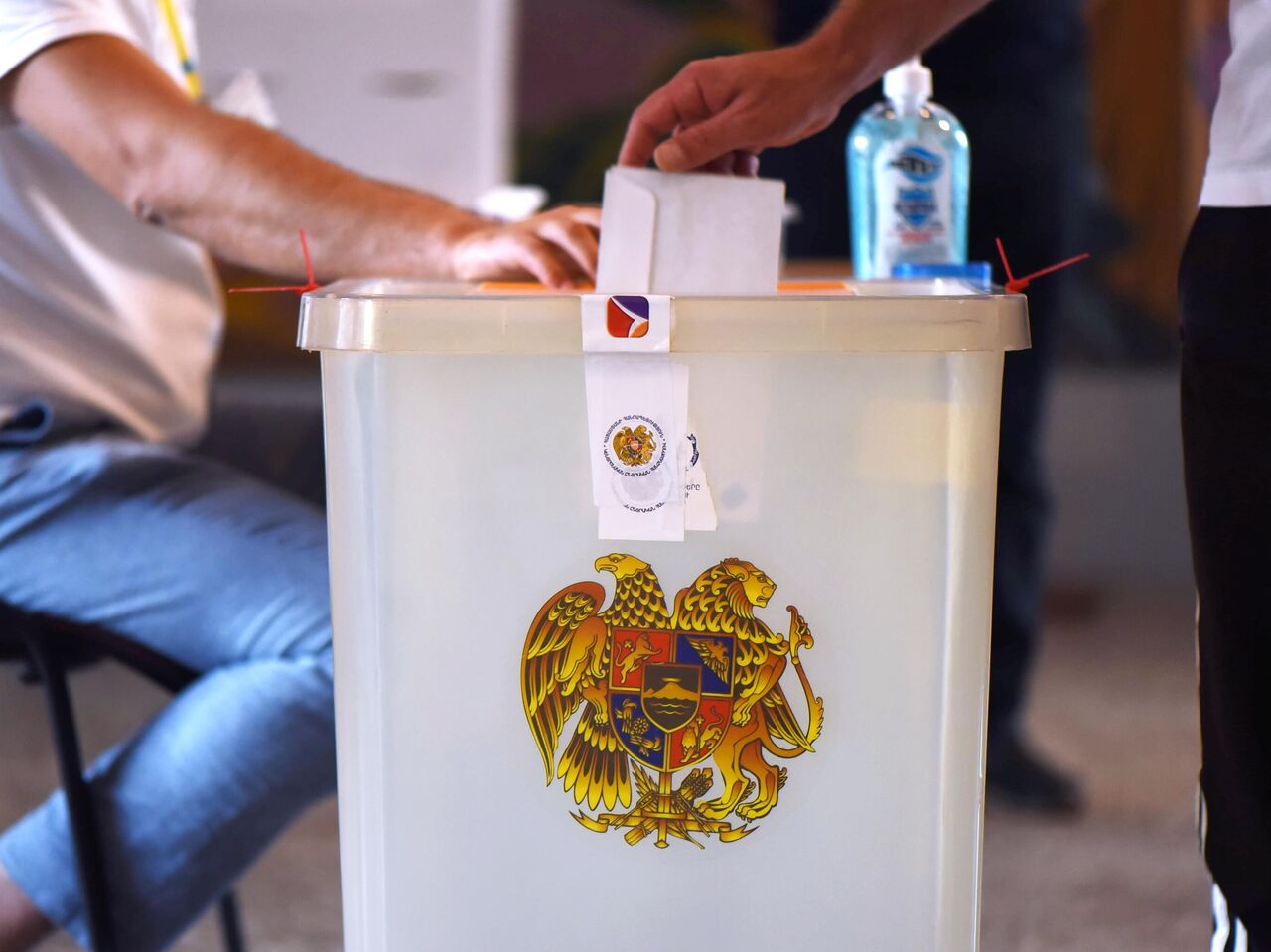
On June 7, 2026, Armenia will hold its next parliamentary
elections, which, like previous ones, are taking place amid acute domestic
political tension. This tension is further aggravated by widespread public
disillusionment, the absence of a clear political agenda, and the near-total
lack of meaningful dialogue between society and the political class. The events
of 2020 and 2023 led to a deep security crisis that continues to exert pressure
on the country’s internal political life.
In this context, many domestic and international analysts
portray the 2026 elections as a decisive event that will supposedly determine
Armenia’s foreign policy course. In pro-Western circles, there is a widespread
view that the outcome will show whether Armenia will continue strengthening its
Western orientation or return to a close alliance with Russia. More radical
assessments suggest that in the event of an opposition victory, Armenia would
abandon the Trans-Caspian International Transport Corridor (TRIPP), attempt to
integrate into the “Russian world”, minimize relations with the West, and seek
to resolve Armenian-Azerbaijani relations under Moscow’s patronage — potentially
leading to a new escalation or even war. Some extreme positions even entertain
the possibility of Armenia integrating with Russia at the level of a Union
State, following the Belarusian model, citing statements by Robert Kocharyan, Gyumri
Mayor Vardan Ghukasyan, and other opposition figures who have expressed
sympathy toward Russia and criticized deeper engagement with the West.
On the other hand, the opposition’s anti-Western rhetoric is
often justified by the need to “save Armenia from Turkification”. More radical
supporters argue that distancing from Russia would automatically place Armenia
under the influence of Turkey and Azerbaijan, as well as under the economic and
political pressure of Turkish-Azerbaijani capital. In their view, TRIPP brings
no real benefits to Armenia and effectively represents concessions to
Azerbaijan under U.S. auspices.
In reality, such assessments are largely one-sided and
propagandistic. The 2026 parliamentary elections do not carry the geopolitical
weight of a “referendum” often attributed to them. First and foremost, they
will serve as a test of domestic legitimacy, governance effectiveness, public
sentiment, and the level of consensus around the peace process. Armenia’s
foreign policy trajectory — rapprochement with the EU, cooperation with the
West in the security sphere, and normalization with Azerbaijan — has already
developed structural inertia since 2020 and was reinforced by the 2025
Washington Declaration. It is unlikely that this trajectory will be radically
altered by the outcome of a single election.
Public Sentiment and Polling Data
On the eve of the elections, various polls present differing
pictures of political support. On average, the ruling Civil Contract party of
Prime Minister Nikol Pashinyan remains in the lead with approximately 24–29%
support. It is followed by the “Strong Armenia” party of Samvel Karapetyan
(9–11%), the Armenia bloc of Robert Kocharyan (around 5%), and Prosperous
Armenia led by Gagik Tsarukyan (2–3%). The position of Serzh Sargsyan’s
Republican Party remains uncertain.
Current data indicate the following:
The key factor is the exceptionally high share of undecided
voters (30–50%). This segment, characterized by deep dissatisfaction with both
the government and the opposition, will be decisive.
Another important factor is the significant decline in trust
toward Russia within Armenian society following the events of 2020–2023,
including the loss of Nagorno-Karabakh and the perceived inaction of the CSTO.
Harsh statements by Russian officials and state media have further intensified
negative perceptions, weakening the position of pro-Russian forces.
Positions of the Government and the
Opposition
The current situation largely works in favor of the ruling
authorities. Despite a decline in approval ratings compared to 2021, the
government maintains a relative advantage due to its active engagement with the
West and its promotion of a peace agenda.
At the same time, the authorities face several
vulnerabilities, including criticism for a perceived soft stance toward
Azerbaijan, populist and emotional rhetoric, slow reforms and social
dissatisfaction, and strained relations with the Armenian Church.
The opposition finds itself in a more difficult position.
Its main challenges include the lack of a unified strategy, internal conflicts,
and dependence on a pro-Russian narrative that is increasingly losing appeal.
The emergence of Samvel Karapetyan has reinvigorated the political field, but
his ties to Russia raise suspicions.
Moreover, the opposition has failed to present realistic
solutions in the field of security. Promises of rapid economic growth and the
“return of Artsakh” are met with skepticism by the public.
Impact of Regional Instability
The war between Iran and the United States/Israel, which
began in February 2026, poses additional risks for Armenia. Potential
consequences include disruptions in gas supplies, rising prices, logistical
challenges, and an influx of refugees.
From a security perspective, there remains a risk of border
destabilization, although no direct spillover has been observed so far.
Politically, the conflict increases public anxiety but is
unlikely to fundamentally alter the election outcome. On the contrary, it may
further weaken pro-Russian narratives, given Moscow’s limited role in
supporting Iran.
Possible Scenarios
The most likely scenario is a victory for Civil Contract
with approximately 35-45% of the vote and the potential formation of a
coalition government.
An alternative scenario would involve a fragmented
parliament and an attempt by the opposition to unite, similar to the Gyumri
model. However, this would be difficult to achieve due to internal divisions.
The 2026 parliamentary elections in Armenia are primarily a
domestic political test rather than a geopolitical turning point. The country’s
foreign policy course has already been established and demonstrates
considerable resilience.
Even amid regional instability and war in the Middle East,
the key determining factor remains the quality of domestic governance. Under
current conditions, the ruling authorities hold a more stable position, while
the opposition faces serious structural constraints.
Nevertheless, the situation remains dynamic, and any forecasts may change under the influence of both internal and external factors.
Research Fellow,
Araik Mkrtumyan


 Latest news
Latest news
Latest newsBulgaria Asks NATO to Strengthen Its Defences Amid Black Sea Threats: Sofia Fears Growing Risks to Maritime Shipping
16.Oct.2026
Black Sea Shipping Risks Threaten Bulgaria’s 5 Million Tonnes of Wheat Exports
15.Oct.2026
Georgia’s Foreign Funding and Political Ban Laws Draw Criticism from the Venice Commission
15.Oct.2026
Kazakhstan Promotes a Caspian Green Energy Corridor: Astana Seeks New Routes to the European Market
14.Oct.2026
Inflation in Romania Accelerates to 6.61%: Rising Prices Increase Pressure on Households and the Economy
13.Oct.2026
Can Europe Protect the International Criminal Court from Trump’s Sanctions?
13.Oct.2026
Georgia’s Constitutional Court Continues Case on Banning Opposition Parties: Political Pluralism at Stake
12.Oct.2026
Azerbaijan and Iran Step Up Security Contacts Amid Hijab Protests
12.Oct.2026
Personnel Shortages Complicate Ukrainian Forces’ Rotation: Ukraine Faces Long-Term Challenges on the Front Line
11.Oct.2026
Trump Eases Sanctions on Russian Fuel After Talks with Putin: Kyiv Fears Boost to Moscow’s War Revenues
10.Oct.2026
Putin Seeks to Strengthen Russia’s Influence in the Post-Soviet Space Through the CIS
10.Oct.2026
Russia and the South Caucasus: External Pressure, Political Competition and a Crisis of Trust
10.Oct.2026
Peaceful Settlement Between Armenia and Azerbaijan: Moving from Declarations to Implementation
10.Oct.2026
Moldova Ready to Accept as Many Ukrainians as Necessary if Situation Worsens This Winter
09.Oct.2026
Turkmenistan Turns Avaza into a Regional Diplomatic Hub as Caspian, Central Asian and CIS Agendas Converge
08.Oct.2026