
 17 Oct 2026









Pakistan and Afghanistan on the Brink of a New War: Causes, Dynamics, and Possible Escalation Scenarios
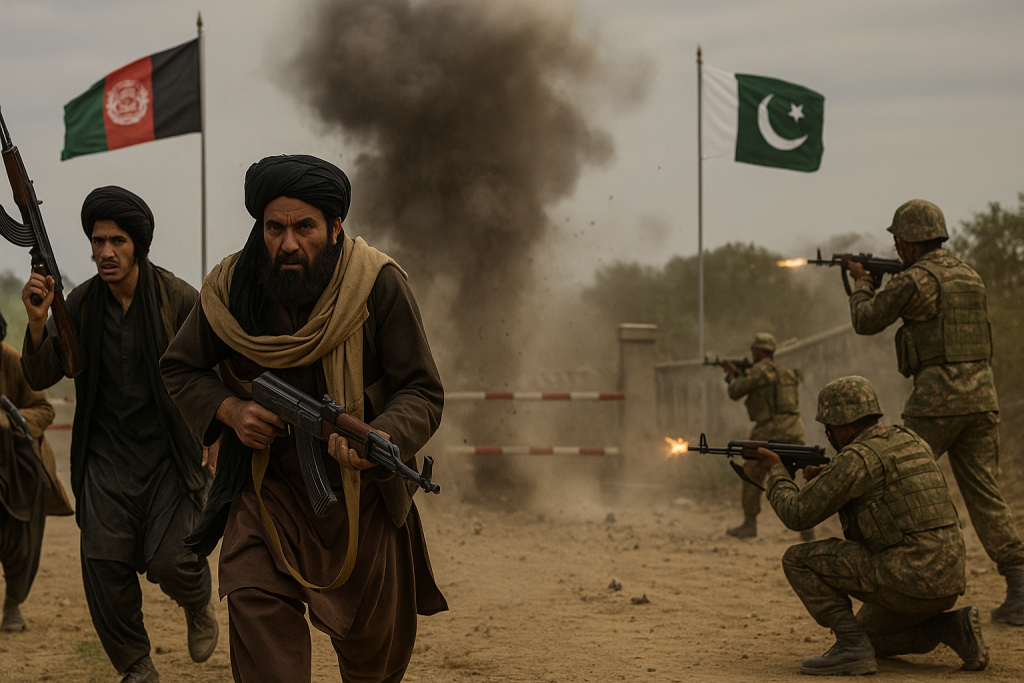
Border clashes between Pakistan and Afghanistan, which erupted in early October, are rapidly turning into one of the most dangerous crises in the region in recent years. Against the backdrop of mutual airstrikes, artillery shelling, and the closure of key crossings, the situation threatens to spiral out of control – with serious consequences for South Asia and the wider Islamic world.
Relations between Islamabad and Kabul have traditionally been tense. After the Taliban came to power in 2021, Pakistan hoped for the establishment of a “friendly regime” that would help stabilize the borders and curb the activity of the Pakistan-based Taliban faction, Tehreek-e-Taliban Pakistan (TTP). However, Afghanistan has effectively become a safe haven for the TTP. Militants attack Pakistani military targets and then retreat across the Afghan border.
In recent months, these attacks have intensified: according to ISPR (the Inter-Services Public Relations of Pakistan), more than 70 attacks on security posts in Khyber Pakhtunkhwa and Balochistan have been recorded since July 2025.
The trigger for the current escalation was Pakistan’s airstrikes on alleged TTP bases in the Kabul area and Paktika province.
Afghan authorities called this a violation of sovereignty and retaliated with artillery strikes on Pakistani border posts in Chaman and Torkham.
As a result, at least 20 Pakistani soldiers were killed (Afghanistan claimed 58 Pakistani troops killed and the capture of 25 posts, while Islamabad reported destroying several Afghan positions and “eliminating 200 militants”). Amid the exchange of strikes, Pakistan closed all major border crossings, paralyzing trade and humanitarian routes between the two countries.

It should be noted that Pakistan is keen to demonstrate its resolve to eliminate the TTP threat and prevent rising anti-war sentiment among its population. At the same time, the army seeks to regain lost influence following the political crises of recent years. Afghanistan (the Taliban), on the other hand, views Pakistan’s strikes as an infringement on sovereignty and as an opportunity to mobilize nationalist sentiment domestically while enhancing its international image as an “independent Islamic state”.
So far, neither the UN nor major powers have taken a clear stance. The U.S., for example, has merely called for “restraint on both sides,” reflecting Washington’s reluctance to get involved in a new conflict in a region where its influence is minimal. China, as the main investor in Pakistan’s infrastructure (China-Pakistan Economic Corridor), is calling for “immediate de-escalation”, fearing threats to its projects in Balochistan. Iran, meanwhile, traditionally supports the Afghan side in diplomatic statements, emphasizing the “need to respect territorial integrity.”
The current fighting could evolve into a low-intensity local war, especially if the TTP and Afghan forces begin acting jointly against Pakistani troops. Military analysts note that Pakistan has a significant advantage – air power, missile systems, and combat experience. However, prolonged combat in mountainous regions and growing radicalization within the country pose a risk to internal stability. Moreover, destabilization in Afghanistan could pave the way for the resurgence of ISIS-Khorasan, potentially turning the region into a new hub of terrorist activity.
There is a high likelihood of a prolonged border war: fighting continues at variable intensity, without a formal declaration of war, but with periodic airstrikes.
The escalation between Pakistan and Afghanistan is not just a border incident. It reflects a deep trust crisis that emerged after the change of power in Kabul and the failure of Pakistan’s strategy, which relied on the Taliban as a tool for regional security. If international actors do not intervene in the coming weeks, the region could be on the brink of a new protracted war – with consequences comparable to the Syrian scenario, but at the heart of South Asia.


 Latest news
Bulgaria Asks NATO to Strengthen Its Defences Amid Black Sea Threats: Sofia Fears Growing Risks to Maritime Shipping
16.Oct.2026
Black Sea Shipping Risks Threaten Bulgaria’s 5 Million Tonnes of Wheat Exports
15.Oct.2026
Georgia’s Foreign Funding and Political Ban Laws Draw Criticism from the Venice Commission
15.Oct.2026
Kazakhstan Promotes a Caspian Green Energy Corridor: Astana Seeks New Routes to the European Market
14.Oct.2026
Inflation in Romania Accelerates to 6.61%: Rising Prices Increase Pressure on Households and the Economy
13.Oct.2026
Can Europe Protect the International Criminal Court from Trump’s Sanctions?
13.Oct.2026
Georgia’s Constitutional Court Continues Case on Banning Opposition Parties: Political Pluralism at Stake
12.Oct.2026
Azerbaijan and Iran Step Up Security Contacts Amid Hijab Protests
12.Oct.2026
Personnel Shortages Complicate Ukrainian Forces’ Rotation: Ukraine Faces Long-Term Challenges on the Front Line
11.Oct.2026
Trump Eases Sanctions on Russian Fuel After Talks with Putin: Kyiv Fears Boost to Moscow’s War Revenues
10.Oct.2026
Putin Seeks to Strengthen Russia’s Influence in the Post-Soviet Space Through the CIS
10.Oct.2026
Russia and the South Caucasus: External Pressure, Political Competition and a Crisis of Trust
10.Oct.2026
Peaceful Settlement Between Armenia and Azerbaijan: Moving from Declarations to Implementation
10.Oct.2026
Moldova Ready to Accept as Many Ukrainians as Necessary if Situation Worsens This Winter
09.Oct.2026
Turkmenistan Turns Avaza into a Regional Diplomatic Hub as Caspian, Central Asian and CIS Agendas Converge
08.Oct.2026