
 27 May 2026









Ukraine Unveils New Naval Drone Capable of Operating Across the Entire Black and Azov Seas
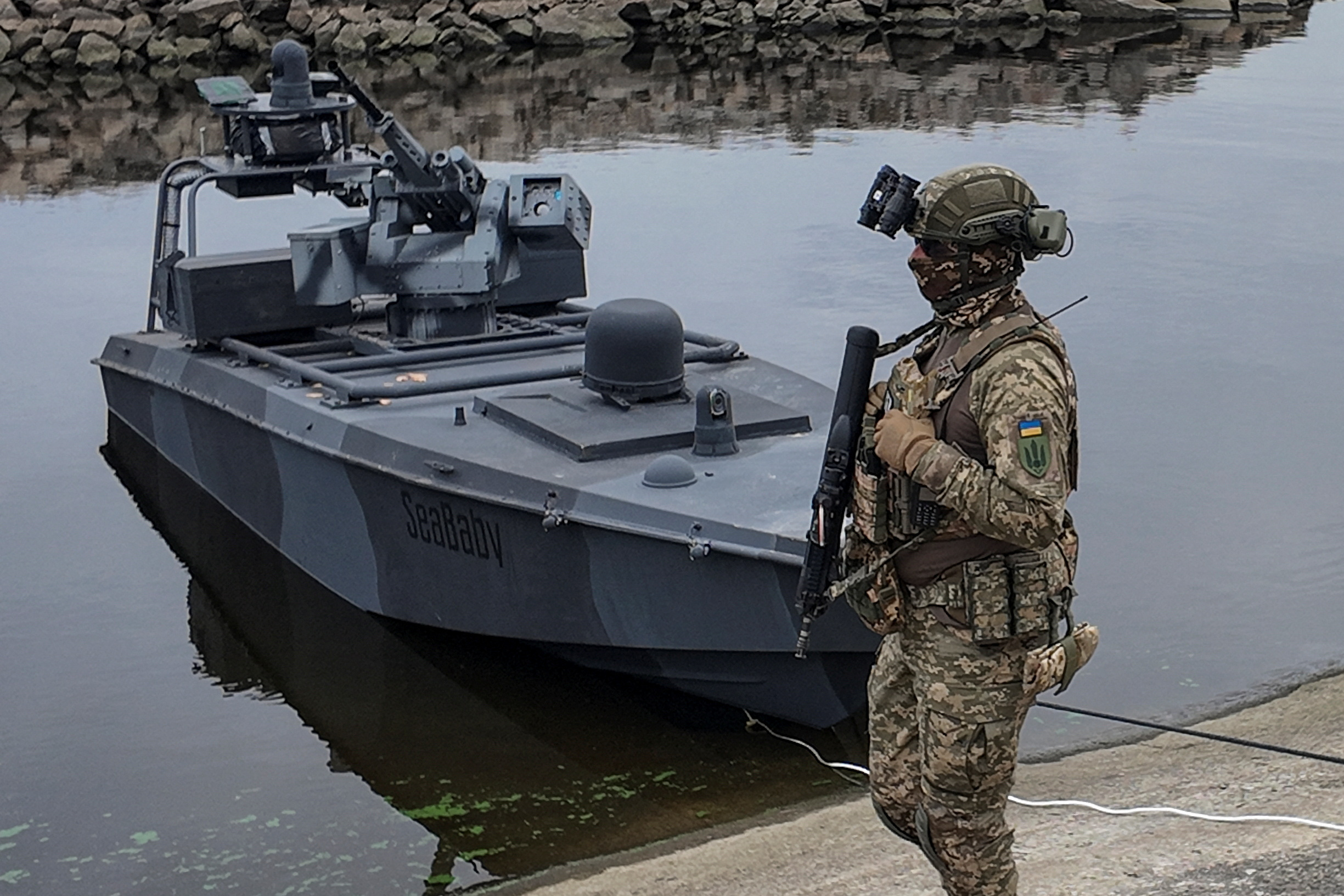
Ukrainian military officials and engineers have announced
the launch of an upgraded unmanned naval platform designed to expand the
country’s maritime combat capabilities amid its ongoing conflict with Russia.
According to Ukrainian representatives, the drone can strike targets across the
region, operate effectively both on the surface and underwater, and increase
pressure on enemy maritime communications.
The platform was developed by a Ukrainian defense enterprise
with support from the Ministry of Defense. It is reported to be capable of
operating far from Ukraine’s coastline – even in areas controlled by Russian
forces. The system is equipped with navigation and autonomous control tools and
can carry out strikes without direct human operation. Officials emphasized that
the drone is intended to enhance the security of Ukrainian shipping and
threaten enemy assets at sea. For Ukraine, this project represents part of a
broader strategy to strengthen its naval defense and demonstrate technological
and operational progress on the maritime front.
Naval and coastal operations have become increasingly
significant in the course of the war between Ukraine and Russia. Given Moscow’s
control over the southern flank and its efforts to restrict Ukrainian exports
and maritime traffic through the Black Sea, Ukraine has been forced to
reinforce its naval defenses. The new platform signals Kyiv’s intent not only
to resist but also to take a more proactive role at sea.
The drone increases the flexibility of Ukraine’s naval
strategy: as an autonomous or semi-autonomous surface/subsurface vehicle, it
can operate beyond direct human control and minimize the risk of personnel
losses. Its mobility and operational range pose a threat to enemy supply lines –
even in areas traditionally considered secure under Russian naval dominance.
The demonstration of such technological progress is also crucial from an
international perspective, signaling that Ukraine is capable not only of
defending itself but also of modernizing its warfare capabilities.
However, the claim that the system can “operate across the entire sea area” remains ambitious. In practice, implementation may face technical and operational limitations, including command and control, logistics, protection from electronic warfare, and energy supply. Moreover, the active use of such drones could provoke stronger countermeasures from Russia – both in maritime zones and near coastal areas. The maritime domain is heavily monitored by air defense and anti-submarine systems, meaning the new platform will have to overcome a complex and hostile environment.

Successful deployment of such systems could shift the
balance of power at sea. Ukraine would gain tools for more active control over
maritime routes and the ability to pressure Russian ports or military
positions. This could strengthen Ukraine’s negotiating position internationally
and encourage foreign partners to expand support in the field of maritime
security. On the other hand, Russia may respond by reinforcing its naval and
air defenses, expanding minefields, or tightening blockades – which could
increase risks for all maritime traffic in the region.
The presentation of this new sea drone marks a significant step for Ukraine in strengthening its naval capabilities in the ongoing war. It is a signal of technological progress and a clear intention to take the initiative at sea. However, its real effectiveness and impact on the course of the conflict will depend on numerous factors – technical reliability, operational readiness, enemy response, and sustained support from allies. Observers will be watching closely to see where and how Ukraine deploys this new weapon and how Russia reacts.


 Latest news
Military Parade as a Manifesto: What Armenia Wants to Tell the World on May 28
25.May.2026
The War in Ukraine: The Russian Army is Already Running Out of Steam
25.May.2026
Railway Breakthrough: Armenia Integrates into the Akhalkalaki–Kars Route
24.May.2026
Tbilisi on the Eve of May 26: Independence Day Turns Into a Day of Political Struggle
24.May.2026
The US and Iran Continue Negotiations on a Possible Agreement and Extension of the Ceasefire
23.May.2026
The United States Suspends Participation in Ukraine Negotiations
22.May.2026
Azerbaijan and Georgia Strengthen Strategic Partnership with New Package of Agreements Signed
21.May.2026
Russia and China Strengthen Coordination on Key International Issues
20.May.2026
Beijing’s Hidden Role: Chinese Military Training for Russian Forces Revealed
19.May.2026
Pakistan Delivers Iran’s Revised Proposal to the US to End the War
18.May.2026