
 24 Nov 2026









EU Presents 22nd Sanctions Package Against Russia: Restrictions to Target Banks, Shadow Fleet and Participation in European Sports
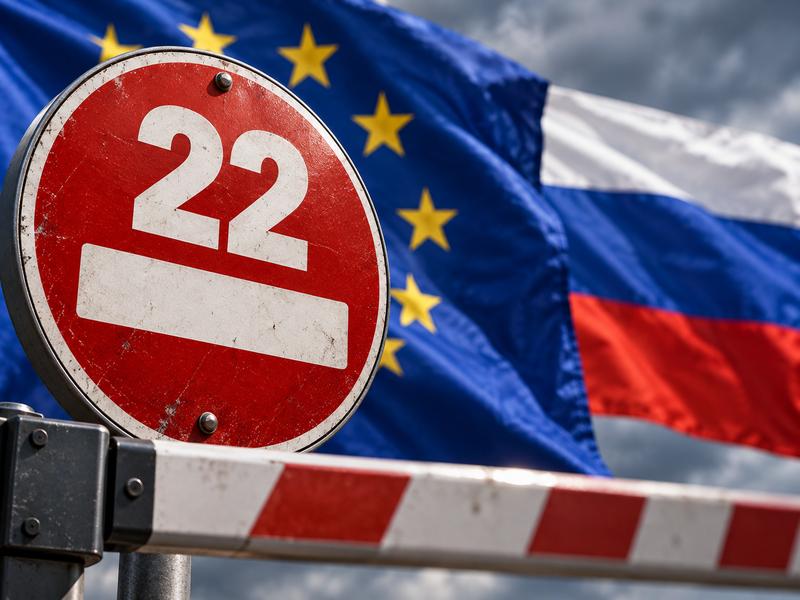
On
23 November 2026, the European Commission presented a draft of the 22nd
sanctions package against Russia, proposing expanded financial restrictions,
tighter controls on cryptocurrency transactions, and new measures targeting
Russia's energy sector and shadow fleet. The initiative also envisages
restrictions on the participation of Russian sports teams and representatives
in European competitions and cultural organisations.
The
announcement of the new package was made by European Commission President
Ursula von der Leyen. According to her, the proposed measures aim to increase
economic and political pressure on Moscow, restrict sources of funding for its
military operations against Ukraine, and reduce opportunities to circumvent the
existing sanctions regime.
One
of the main areas targeted by the new package is Russia's financial sector. The
European Commission proposes extending restrictions on financial transactions
to approximately 60 Russian banks and removing them from the SWIFT
international financial messaging system. Additional restrictions are also
envisaged for cryptocurrency platforms and payment networks used to circumvent
sanctions.
A
separate section of the initiative concerns Russia's energy sector. Brussels
intends to expand the ban on European companies providing services related to
the construction, operation and maintenance of Russian energy infrastructure,
particularly oil refining facilities. For the first time, similar restrictions
are also proposed for services in the electricity sector.
Additional
measures are envisaged against Russia's shadow fleet, which is used to
transport oil and circumvent Western restrictions. The European Commission
proposes adding more than 70 vessels to the sanctions list, as well as
prohibiting services for tankers insured in Russia. These initiatives are
intended to further reduce Russia's capacity to export energy resources through
alternative transportation and insurance arrangements.
Another
important element of the package concerns restrictions on Russian nationals who
have participated in hostilities against Ukraine. The European Commission
proposes introducing visa restrictions for former Russian military personnel
and participants in the war, citing potential security concerns associated with
their presence in the EU. At the same time, the package envisages prohibiting
EU citizens from holding positions on the governing bodies of Russian companies.
Particular
attention is also given to the sports and cultural sectors. The proposal
provides for a ban on Russian national teams and athletes competing under the
Russian flag in events held within the EU, as well as on the use of official
Russian state symbols at such events. In addition, Brussels intends to restrict
financial flows from Russian sponsors to European sports and cultural
organisations, as well as the participation of Russian representatives in the
governing bodies of European sports federations.
The
22nd sanctions package also provides for expanded restrictions on companies
involved in facilitating sanctions circumvention and strengthened controls on
the supply of goods and technologies that could be used by Russia's
military-industrial complex.
The
measures presented by the European Commission remain proposals and must undergo
approval by EU member states. Their final adoption will require the unanimous
support of all 27 EU countries. Consequently, the content of the package may
change during the subsequent negotiations.
The
new initiative demonstrates Brussels' intention to move beyond predominantly
sectoral sanctions pressure towards broader control over the financial, energy,
transport and institutional channels of Russia's interaction with European
countries. The implementation of restrictions targeting the shadow fleet will
be particularly significant for the Black Sea-Caspian region, as they could
affect oil logistics, maritime insurance, port infrastructure and energy
transportation routes.


 Latest news
EU Presents 22nd Sanctions Package Against Russia: Restrictions to Target Banks, Shadow Fleet and Participation in European Sports
24.Nov.2026
Two Commercial Vessels Attacked in the Black Sea off Bulgaria
23.Nov.2026
EU Allocates Another €1 Billion to Ukraine: European Military Support Takes on a Long-Term Dimension
22.Nov.2026
Europe Prepares a Military Mission for Ukraine: 2800 Troops Rehearse Post-War Deployment Scenarios
21.Nov.2026
Russian Missiles and a Drone Fall on Polish Territory: NATO Faces New Threats on Its Eastern Flank
21.Nov.2026
Russia Strikes Kyiv Bridges Following Ukraine’s Attack on the Crimean Bridge: Transport Infrastructure Becomes a New Front in the Escalation
20.Nov.2026
The "Coalition of the Willing" Discusses Security Guarantees and Continued Support for Kyiv
19.Nov.2026
Tanker Sinks off Bulgaria After Being Hit Four Times: All 19 Crew Members Rescued
18.Nov.2026
Europe Accelerates Defence Integration: EU Identifies 8 Priorities for Joint Weapons Development
17.Nov.2026
Bulgaria and North Macedonia Plan to Begin Construction of New Border Crossing in October 2027
17.Nov.2026
Central Asia Accelerates Digitalisation of the Trans-Caspian Transport Corridor
16.Nov.2026
Bulgaria, Romania and Turkiye Deploy Naval Assets in BETUL 8 Rescue Operation
16.Nov.2026
Armenia Becomes the EU’s Leading Partner in the South Caucasus: Georgia Loses Influence in Europe’s Regional Strategy
15.Nov.2026
Ukraine Expands Its Campaign Against Russia’s Strategic Infrastructure
15.Nov.2026
Defence Partnerships without a Common Strategy? Turkiye Expands Military Ties with Qatar, Saudi Arabia and Pakistan
14.Nov.2026